It’s Not Just About Being Near the Water
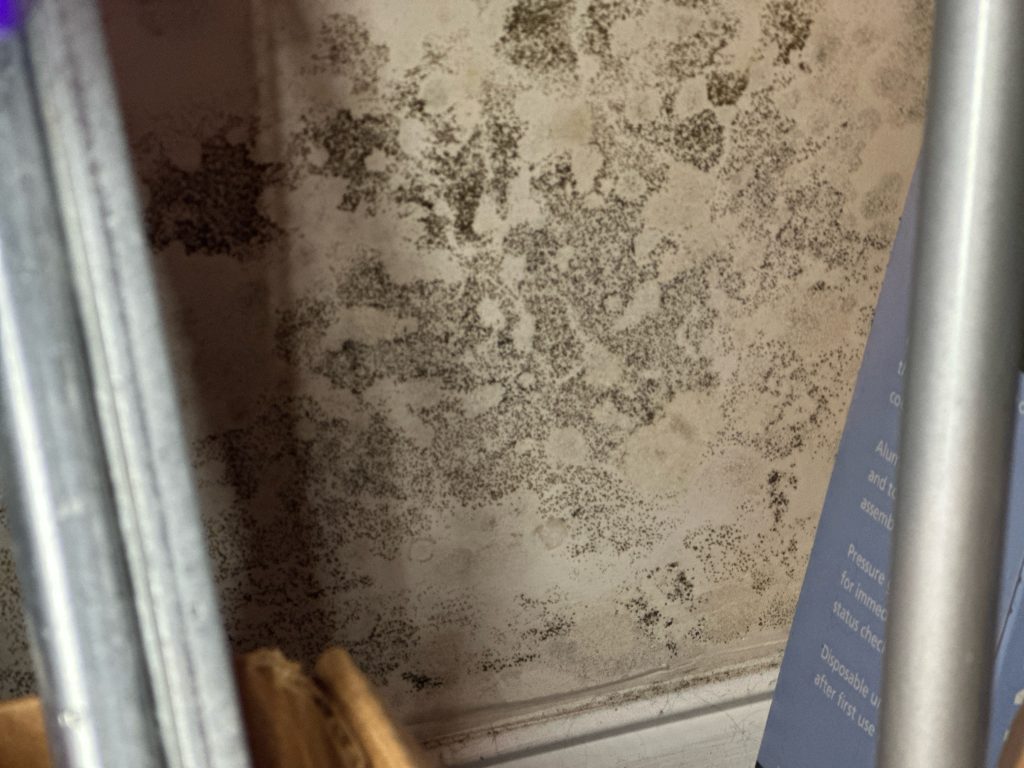
Mold growth on yachts and boats is so common that many owners treat it as an inevitable fact of marine life. Musty odors below decks, black spotting on headliners, fuzzy growth in lockers and bilge spaces — these are accepted as just part of owning a vessel in a tropical or subtropical climate. But while humidity exposure is certainly a contributing factor, mold susceptibility aboard vessels isn’t random. There are specific structural, material, and behavioral factors that make marine environments dramatically more vulnerable to mold than comparable square footage in a land-based building. Understanding them is the first step toward managing the problem effectively.
Hull Condensation: The Physics Problem You Can’t Avoid
A yacht hull — fiberglass, aluminum, or steel — is in direct contact with the seawater surrounding it. In South Florida, summer sea surface temperatures range from 82–88°F, but the air temperature can be 90°F or higher with humidity near saturation. When you run air conditioning inside the vessel, the interior surfaces and hull cool below the dew point of the surrounding air. Condensation forms — not visibly in most cases, but persistently in the interstitial spaces between the outer hull, insulation, inner liner, and cabinetry.
This condensation has nowhere to go. In a well-drained space with good air circulation, it might evaporate. In the typical marine interior — with fiberglass or wood substrates tucked against foam insulation against a hull, with minimal air movement in hidden voids — it wicks into materials and stays. Over weeks and months, this continuous micro-moisture creates the chronic damp conditions that mold needs to establish and thrive.
Fiberglass, Wood, and Foam: Materials That Hold Moisture
The structural materials common in yacht construction have varying moisture absorption characteristics:
- Fiberglass (GRP) hulls — the outer shell itself doesn’t absorb much water when new, but gelcoat can develop osmotic blistering over time, allowing water ingress into the laminate. Older vessels with aging laminate can have substantial moisture content in the hull structure itself.
- Marine plywood and solid wood — used extensively for bulkheads, cabinetry, soles, and structural members. Wood is hygroscopic — it absorbs and releases moisture as ambient humidity changes. In the marine environment, wood components cycle through wet-dry cycles repeatedly, eventually reaching a chronic elevated moisture content that supports mold and rot.
- Closed-cell foam insulation — installed against the hull to reduce condensation and thermal bridging. When foam insulation fails, is damaged, or has gaps, the hull surface behind it becomes a condensation and mold site invisible to the owner.
- Upholstery, headliners, and soft furnishings — absorb and release humidity with every cycle. In a vessel that sits closed between uses, these materials slowly accumulate mold spores and surface growth.
Limited Air Movement in Enclosed Spaces
The layout of a typical yacht is the opposite of what you’d design for air quality management. Engine rooms, bilge spaces, chain lockers, anchor wells, lazarette lockers, and storage compartments are sealed compartments with minimal or no air circulation. These are precisely the spaces where moisture accumulates and mold grows. Without deliberate ventilation of these spaces — through passive dorades, active fans, or periodic airing out — they become chronic mold reservoirs that contaminate the rest of the vessel’s air.
Temperature Differentials Across Surfaces
On an air-conditioned vessel, there are often dramatic temperature differentials between the conditioned interior (typically 72–76°F) and the hull surface in contact with warm seawater. Any surface in the path of that thermal gradient — and there are many in a typical yacht construction — will be at or below the dew point of the interior air for significant portions of the day. This is the physics of condensation, and no amount of dehumidification can fully overcome it without also addressing the thermal bridging that creates the cold surface.
Intermittent Occupancy: The Worst Pattern for Mold Prevention
Perhaps the biggest mold risk factor in recreational and charter yachts is how they’re used: intensively for a few days, then sealed and left at the dock for a week or more. When a vessel is sealed without dehumidification or ventilation in South Florida’s summer conditions — where ambient humidity is near saturation — interior humidity rapidly climbs to 80–95% RH. At those levels, mold can begin establishing on surfaces within 24–48 hours, and can produce visible growth within 3–5 days on suitable substrates.
Vessels sitting in South Florida marinas between charters are particularly vulnerable. Charter management companies should require that dehumidifiers or HVAC systems run continuously between charters — the electricity cost is trivial compared to the remediation cost of an infested vessel.
What to Do
The EPA’s mold guidance is applicable in marine contexts: control moisture, maintain ventilation, and address visible growth promptly. For vessel-specific assessment and remediation, qualified IAQ professionals with marine experience are essential — the hidden nature of moisture and mold in marine construction means that surface inspections often miss the real problem. Full Spectrum Environmental and Green Fox Air Quality have experience with marine IAQ assessment in South Florida and can evaluate moisture and mold conditions in both accessible and interstitial spaces.
Bottom Line
Yachts are mold-prone not because of bad luck but because of physics: hull condensation, hygroscopic materials, sealed voids with no air circulation, and intermittent occupancy patterns create chronic moisture conditions that mold exploits. Active humidity management and deliberate ventilation are the only reliable mitigation strategies.