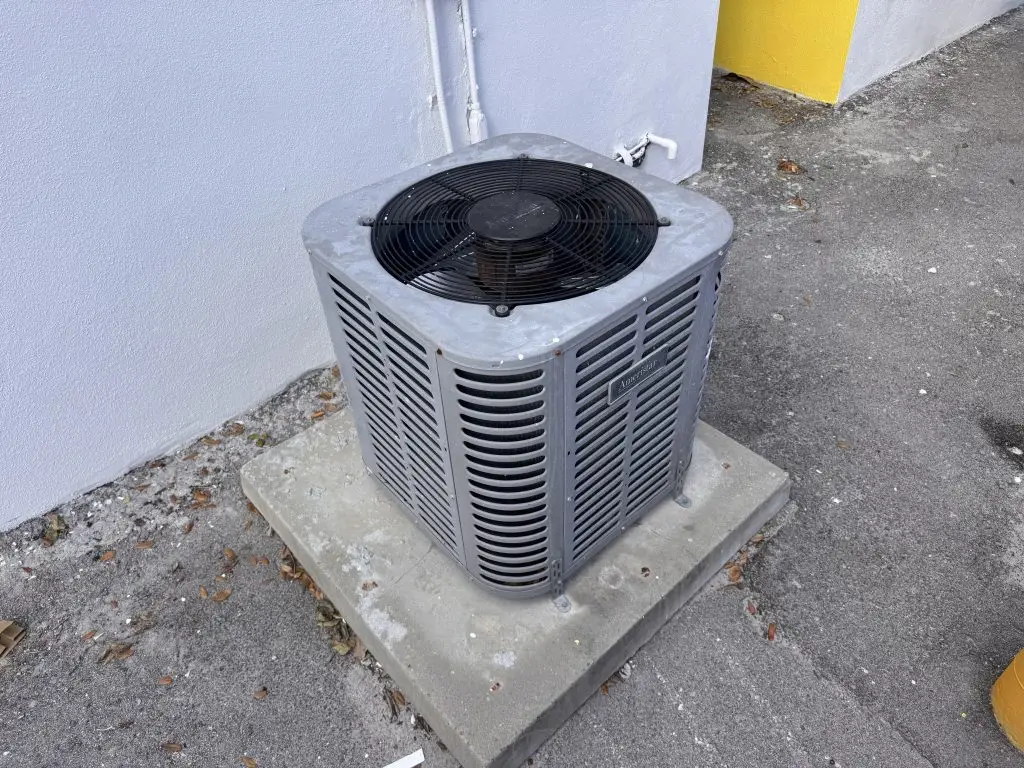
The Most Common HVAC System in Florida
Single-stage HVAC systems are the most widely installed type of air conditioning in Florida and across the United States. The vast majority of residential and light commercial systems in South Florida are single-stage units, and for good reason — they are proven, reliable, and straightforward in design. Understanding how they work helps homeowners and building occupants know what to expect from their equipment.
How a Single-Stage System Works
A single-stage compressor operates in one mode: fully on or fully off. When the thermostat calls for cooling, the compressor starts and runs at 100% capacity. When the set temperature is reached, it shuts off completely. There is no middle-speed setting or modulation — the system is either running at full output or not running at all.
This simplicity is one of the system’s strengths. Fewer moving parts and less complex controls mean fewer components that can fail. Single-stage systems have a long track record of reliable operation and are well understood by HVAC technicians throughout the industry.
Proper Sizing Is the Key Variable
Like any HVAC system, proper sizing is critical for a single-stage unit to perform well. A system that is correctly sized for the space it serves will run in cycles of reasonable duration, effectively removing both heat and moisture from the air. In South Florida’s climate — where humidity control is as important as temperature control — a properly sized and functioning single-stage system can and does maintain comfortable indoor conditions for millions of residents.
Oversizing is the most common installation error with any system type. An oversized single-stage unit will satisfy the thermostat setpoint quickly, then shut off before it has had enough run time to adequately dehumidify the space. This is not a flaw of the single-stage design itself — it is a sizing and installation issue. The fix is appropriate system selection from the start, or supplemental dehumidification if an existing oversized system is in place.
Single-Stage vs. Two-Stage and Variable-Speed Systems
Two-stage and variable-speed systems offer additional flexibility by modulating their output — running at lower capacity during milder conditions and increasing capacity when demand is higher. This allows longer, slower run cycles that can be more effective at humidity removal and, in some cases, more energy-efficient during part-load hours.
That said, single-stage systems remain a completely appropriate choice for many installations. They are less expensive to purchase and install, easier to service, and perform very well when properly sized. In South Florida’s consistently warm climate, the gap in humidity control between a well-sized single-stage system and a variable-speed system may be more or less significant depending on the specific home, occupancy patterns, and duct system.
What Single-Stage Owners Should Know
If you have a single-stage system that is properly sized and well-maintained, it should provide reliable cooling and reasonable humidity control. Regular maintenance — including coil cleaning, filter changes, and checking refrigerant charge — is important for any system type but directly affects a single-stage unit’s ability to dehumidify effectively.
If you are experiencing persistent humidity problems with a single-stage system, the cause is often one of the following: the system is oversized for the space, the duct system has restrictions or leaks, the system is low on refrigerant, or the evaporator coil is dirty. A qualified HVAC and IAQ professional can evaluate which factor applies and recommend a targeted solution — which may be as simple as a maintenance visit or a duct inspection.
For a look at how two-stage and variable-speed systems differ in operation, see our post on multi-stage and variable-speed HVAC systems.