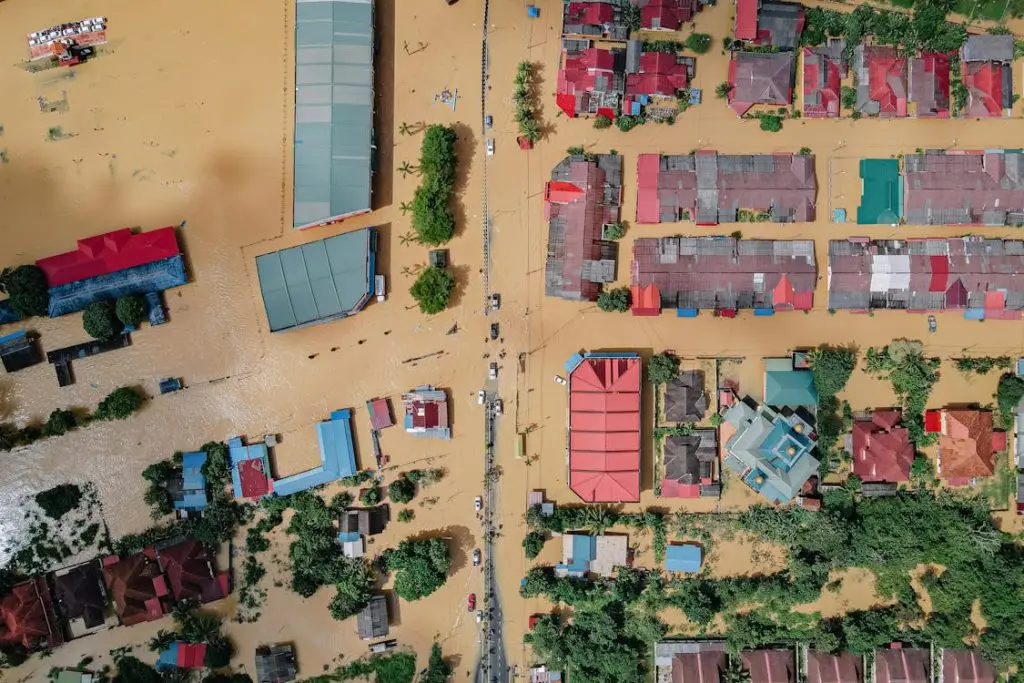
The IAQ Clock Starts at Landfall
When a hurricane passes through South Florida, the conversation quickly turns to structural damage, insurance claims, and debris removal. But one of the most consequential — and time-sensitive — concerns rarely gets the attention it deserves: what the storm has done to the indoor air quality of your home or building. The decisions you make in the first 72 hours after a storm significantly determine whether a flood event becomes a mold event.
Why Water Intrusion After Storms Is Different
Not all water intrusion carries the same risk. Plumbing leaks typically introduce clean or gray water that, while still capable of supporting mold if not dried quickly, does not introduce significant biological contamination. Storm water is different. Floodwater in South Florida carries bacteria, sewage contamination, agricultural runoff, and chemical compounds from inundated properties. Roofing failures allow wind-driven rain through damaged or missing shingles, often depositing moisture in attic spaces where it is invisible until mold is well established.
Hours 0–24: Safety and Assessment
Do not re-enter a flooded building until utilities have been inspected and the structure has been deemed safe. Once inside, the first priority is identifying and stopping active water entry. Tarping damaged roofs, boarding broken windows, and locating shut-off valves for damaged plumbing lines all reduce the total moisture load entering the building.
Document all water damage extensively with photographs before any removal or drying begins. Your insurance documentation and any future mold assessment will depend on an accurate record of the initial damage extent.
Hours 24–48: Drying Is a Race Against Mold
Mold can begin colonizing wet porous materials — drywall, insulation, carpet, wood framing — within 24 to 48 hours under South Florida’s temperature and humidity conditions. The window for effective drying without mold growth is narrow. Professional water damage restoration companies use high-capacity dehumidifiers, air movers, and moisture meters to dry structures to acceptable levels. If you cannot hire professional help immediately, rent commercial-grade equipment rather than relying on household fans and dehumidifiers, which are inadequate for significant water intrusion.
Wet carpet and carpet padding should be removed immediately in virtually all cases — they cannot be effectively dried in place and are prime mold substrates. Wet drywall that has been inundated with category 2 or 3 water (gray or black water) should be removed to at least 12 inches above the highest water line.
Hours 48–72: Ventilation and Monitoring
Once active water entry has stopped and aggressive drying has begun, ventilation becomes important. Cross-ventilate the building to bring dry air through the structure — though in South Florida’s summer climate, outdoor air is often more humid than indoor air, so monitor conditions carefully. If outdoor RH exceeds indoor RH, keep the building closed and rely on mechanical dehumidification.
Moisture meters are essential for tracking drying progress. Wall cavities, subfloor assemblies, and ceiling spaces hold moisture long after surface materials appear dry. Professional restorers use penetrating and non-penetrating meters to verify that moisture content in structural materials has returned to acceptable levels before reconstruction begins.
When to Call for Professional IAQ Assessment
After a significant storm event, a professional indoor air quality assessment serves several purposes. It establishes a documented baseline of conditions post-event, identifies hidden moisture and incipient mold growth before it becomes widespread, and provides defensible data for insurance claims. If you are returning to a building that was vacated during a storm and has been closed up in the summer heat, air sampling and surface sampling can reveal whether conditions are safe for occupancy before re-entry.
In the aftermath of a major storm, the demand for mold assessors and remediators in South Florida greatly exceeds supply. Engaging qualified professionals early — as soon as the storm passes and re-entry is safe — significantly improves your chances of avoiding the lengthy remediation processes that plague properties where action was delayed.