Humidity and Indoor Air Quality Are Inseparable
Of all the factors that influence indoor air quality in South Florida, relative humidity may be the most consequential. Humidity affects nearly every other IAQ variable: mold growth, dust mite populations, VOC off-gassing rates, the survival of airborne pathogens, and the effectiveness of air filtration. Getting humidity right inside your home or building is not a comfort preference — it is a health imperative in this climate.
What Relative Humidity Actually Measures
Relative humidity (RH) expresses how much moisture the air holds as a percentage of the maximum it could hold at that temperature. Warm air can hold significantly more moisture than cool air, which is why South Florida’s outdoor air — often 80–90°F with 70–90% RH in summer — feels so oppressive. When that outdoor air enters a building and is cooled by air conditioning, the relative humidity drops — but only if the AC system is properly designed and operating to remove adequate moisture.
The 50% Target and Why It Matters
ASHRAE, the American Society of Heating, Refrigerating and Air-Conditioning Engineers, recommends maintaining indoor relative humidity between 30 and 60 percent. In South Florida, the practical goal is to keep indoor RH at or below 50 percent year-round. Here’s why that threshold is so important:
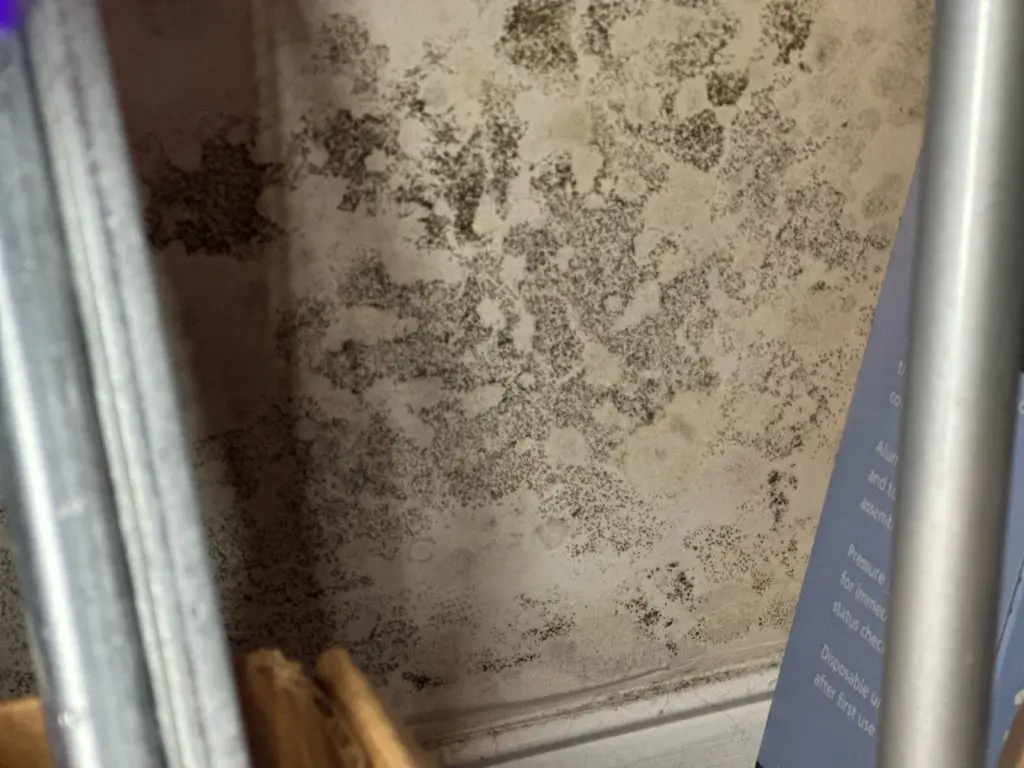
Mold growth requires surface moisture, and active mold growth on most building materials is inhibited when ambient RH stays below 60 percent. Some mold species can initiate growth at 70 percent RH. Keeping indoor air at 50 percent creates a meaningful margin of safety against surface condensation and mold colonization.
Dust mites — one of the most potent allergen sources in South Florida homes — require indoor RH above 50 percent to survive. Their populations collapse in drier environments. For the significant percentage of the population with dust mite allergies, humidity control is among the most effective interventions available.
Airborne pathogen survival is influenced by humidity. Research has shown that many respiratory viruses survive and transmit more effectively at low humidity (below 40%) and at high humidity (above 70%). The sweet spot of 40–60% RH creates the least favorable conditions for pathogen transmission.
Why South Florida AC Systems Often Fail at Humidity Control
Standard air conditioning systems are sized to meet a building’s peak cooling load — typically the hottest afternoon of the year. In South Florida, that means oversized equipment that cools the space rapidly and shuts off before completing enough runtime to adequately dehumidify the air. This “short-cycling” produces spaces that feel cool but remain humid — sometimes exceeding 65–70% RH even with the AC running regularly.
Additional contributors to humidity control failure include: undersized or clogged condensate drain systems that allow water to accumulate; leaky return air ductwork that draws unconditioned attic air into the system; and setback thermostats that allow buildings to warm and humidify overnight or during unoccupied periods.
Solutions: Beyond the Standard AC System
For homes and buildings that struggle to maintain acceptable humidity levels, several targeted solutions exist. Whole-house dehumidifiers installed in-line with the HVAC system can remove 70–120 pints of moisture per day regardless of whether the AC is actively cooling. They are particularly valuable during mild weather when the AC doesn’t run frequently but humidity remains high.
Variable-speed air handlers run at lower speeds for longer periods, providing superior dehumidification compared to single-speed systems that cycle on and off. Humidity-sensing thermostats can trigger dehumidification cycles independently of temperature calls.
If you are uncertain whether your indoor humidity is in the acceptable range, a simple digital hygrometer (available for under $20) placed in a central living area will give you a continuous reading. If you are consistently seeing readings above 60 percent, it’s worth having a professional evaluate your HVAC system’s latent (moisture removal) capacity.