Why Commercial IAQ Is a Different Problem
Indoor air quality issues in commercial buildings are fundamentally more complex than in residential settings. More occupants, denser occupancy, shared HVAC systems, diverse activities and chemical sources, and the added dimension of legal liability all raise the stakes for property managers and building owners. In South Florida’s commercial real estate market — where Class A office space, medical facilities, retail centers, and hospitality properties operate in one of the most mold-conducive climates in the country — IAQ management is not optional.
Common IAQ Complaints in Commercial Settings
The most frequently reported IAQ complaints in commercial buildings follow recognizable patterns. Sick Building Syndrome (SBS) — a constellation of nonspecific symptoms including headache, eye irritation, fatigue, and difficulty concentrating that improve when occupants leave the building — affects an estimated 30 percent of renovated buildings globally. In South Florida, SBS cases disproportionately involve moisture and biological contamination given the climate.
Other common complaints include: inconsistent temperatures and humidity across zones, visible mold on ceiling tiles or around HVAC diffusers, persistent odors that occupants cannot identify, and elevated CO₂ levels due to inadequate fresh air ventilation. CO₂ above 1,000 ppm — a common finding in densely occupied conference rooms and retail spaces — causes measurable cognitive impairment and fatigue.
The Ventilation Deficit
Inadequate outdoor air ventilation is the single most common root cause of commercial IAQ complaints. ASHRAE Standard 62.1 specifies minimum outdoor air rates for different occupancy types — typically 15 to 20 cubic feet per minute per person for office spaces. Many commercial HVAC systems in South Florida do not deliver these rates in practice, either because the systems were designed to minimum standards and are now serving denser occupancy than originally planned, or because energy-saving modifications have reduced outdoor air intake.
Increasing outdoor air rates in South Florida must be balanced against the increased cooling and dehumidification load it creates. Poorly designed ventilation upgrades that bring in more unconditioned outdoor air without adequate dehumidification capacity can worsen humidity problems. Energy recovery ventilation (ERV) systems are the appropriate technology for increasing fresh air rates in this climate without proportional energy penalty.
Mold in Commercial Buildings: Legal and Operational Implications
Mold events in commercial buildings carry legal implications that residential situations do not. Tenants may invoke lease provisions related to habitability and quiet enjoyment. Employees can file OSHA complaints or workers’ compensation claims related to IAQ conditions. In Florida, there is no specific commercial mold disclosure statute analogous to the residential requirements, but general tort liability, lease obligations, and OSHA’s General Duty Clause create overlapping obligations for building owners and employers.
Proactive IAQ management — including documented HVAC maintenance, regular filter replacements, moisture monitoring, and prompt investigation of complaints — provides both genuine protection for occupants and a defensible record in the event of claims.
Conducting a Commercial IAQ Investigation
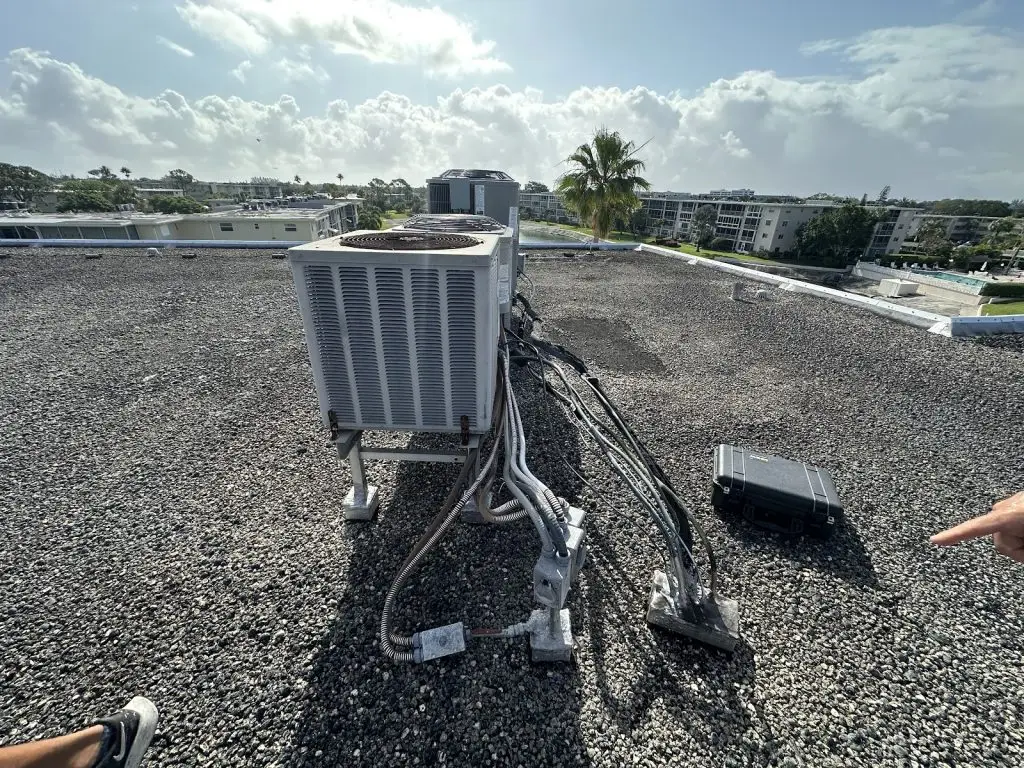
A professional commercial IAQ investigation typically includes a walk-through assessment of the mechanical systems, building envelope, and occupied spaces; real-time measurements of temperature, relative humidity, CO₂, CO, and total VOCs; air sampling for mold spores and specific chemical contaminants where indicated; and a written report with findings and prioritized recommendations.
The investigation should identify root causes rather than symptoms. Finding elevated mold spore counts in air samples is a finding; identifying the specific moisture source, HVAC deficiency, or building envelope failure that created the conditions is the investigation. Remediation without root cause correction will result in recurring problems.